

Strength training is one of the most effective ways to build muscle, increase power, and improve overall health. However, doing the same exercises with the same weights over and over will only get you so far. If you want to continue progressing, avoid plateaus, and train smartly, you need a structured plan. This is where periodisation comes in.
At Penguin Fitness, we believe that strength training should not only be challenging but also strategic. Periodisation is the method of breaking your training into planned phases, ensuring you steadily progress while reducing the risk of burnout or injury. In this article, we’ll explain what periodisation is, why it matters, and how you can apply it to your own strength training programme.
Periodisation is the systematic planning of your training over a set period. Instead of lifting the same weights week after week, you adjust the intensity, volume, and type of exercises to match your goals.
Think of it as mapping out your fitness journey. Just as you wouldn’t try to sprint a marathon, you shouldn’t try to train at maximum intensity every week. Periodisation helps you build up gradually, peak at the right time, and recover properly.
Periodisation is usually broken down into cycles:
This is your long-term training plan. It might last 6 months to a year, depending on your goals. For example, preparing for a competition or simply wanting to build strength over the year.
This is a shorter block, usually lasting 4–8 weeks. Each mesocycle focuses on a specific training goal, such as hypertrophy (muscle growth), strength, or power.
This is the smallest unit, often a week of training. It lays out exactly what workouts you’ll do and how hard you’ll push yourself.
By breaking training into these cycles, you can balance progression and recovery.
There are several ways to organise your training. Here are the most common:
Starts with high volume and low intensity (lighter weights, more reps).
Progressively shifts to lower volume and higher intensity (heavier weights, fewer reps).
Best for beginners and those who want a clear, structured plan.
Intensity and volume change more frequently, even day to day or week to week.
For example:
Monday – heavy weights, low reps
Wednesday – moderate weights, medium reps
Friday – lighter weights, higher reps
Great for experienced lifters who need variety.
Training is divided into focused blocks, such as strength, power, or endurance.
Each block builds on the previous one.
Often used by athletes aiming for peak performance in competition.
At Penguin Fitness, we recommend a simple approach to start with:
Do you want to build muscle, increase strength, or boost power? Your training structure will depend on this.
Choose a long-term timeframe (e.g., 6 months). Decide on your end goal, such as lifting a heavier squat or preparing for a powerlifting event.
Organise your training into 4–6 week blocks. Example:
Block 1: Hypertrophy (higher reps, moderate weight)
Block 2: Strength (moderate reps, heavier weight)
Block 3: Power (low reps, very heavy weight, explosive movements)
Each week should have variety and progression. For instance:
Week 1–2: Lighter load to build endurance
Week 3–4: Increase weight and reduce reps
Week 5–6: Push towards heavier lifts
Every 4–6 weeks, include a lighter week to let your body recover. This prevents overtraining and keeps you progressing.
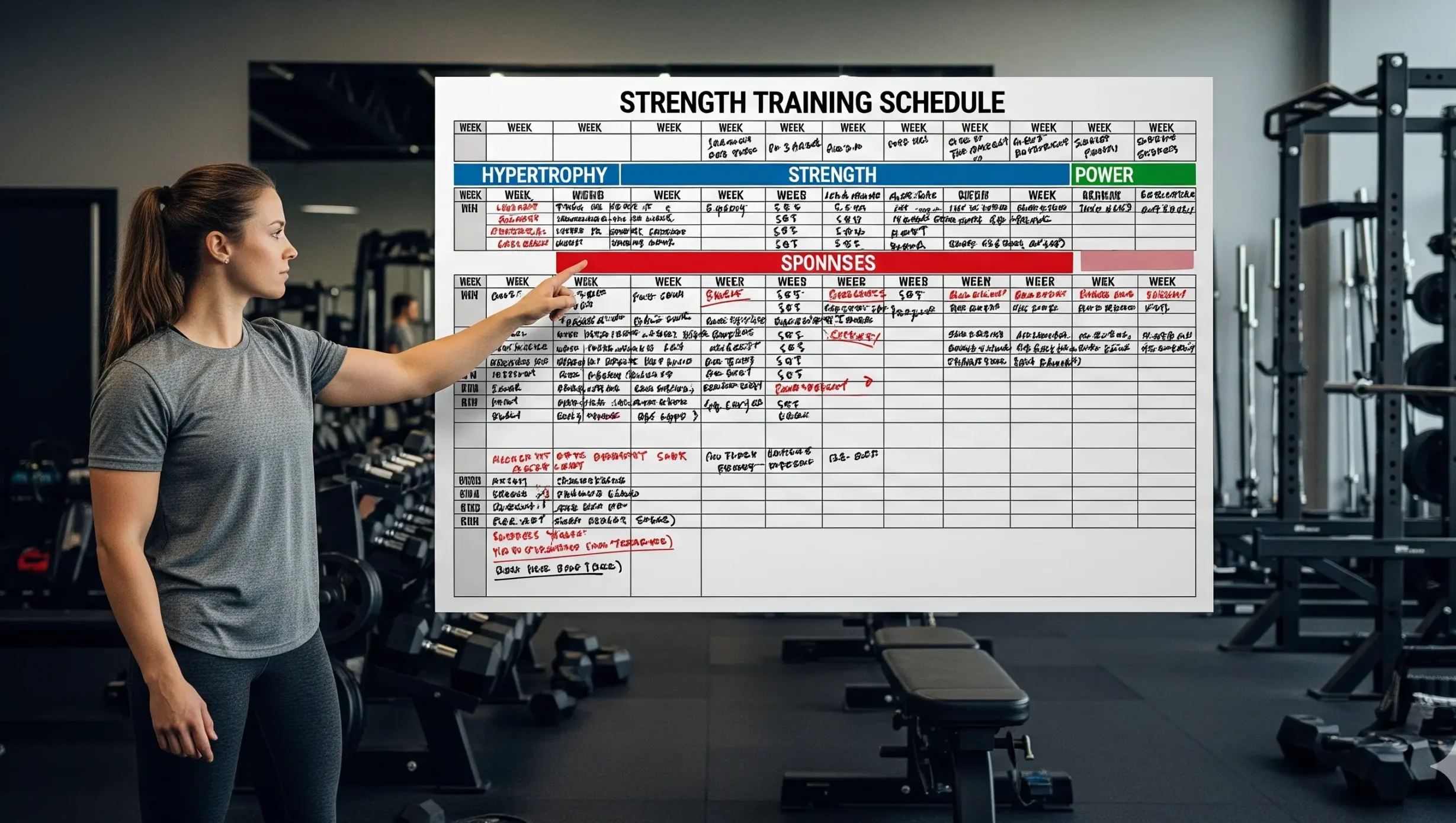
Here’s a simple 12-week example for someone wanting to increase strength in major lifts like the squat, bench, and deadlift:
Weeks 1–4 (Hypertrophy Phase):
3–4 sets of 8–12 reps
Focus on muscle building with moderate weights
Accessories: lunges, push-ups, rows
Weeks 5–8 (Strength Phase):
4–5 sets of 4–6 reps
Heavier weights with longer rest periods
Accessories: Romanian deadlifts, weighted dips
Weeks 9–12 (Power Phase):
5–6 sets of 2–4 reps
Maximum effort lifts with explosive movements
Accessories: box jumps, speed bench press
Week 13 (Deload):
Reduce weight and volume by 40–50%
Focus on recovery, stretching, and mobility work
Start simple if you’re new. Linear periodisation is often the easiest approach.
Don’t be afraid to adjust your plan if life gets in the way.
Warm up properly before every session to avoid injury.
Use progressive overload (gradually increasing weights) to keep improving.
Get enough sleep – recovery is when strength is truly built.
Periodisation may sound technical, but it’s simply a smart way to plan your strength training. By dividing your training into cycles, you can progress steadily, avoid burnout, and hit new personal bests.
At Penguin Fitness, we encourage everyone – from beginners to advanced lifters – to embrace periodisation. Whether your goal is to build muscle, get stronger, or perform at your best, this method ensures long-term success.
WhatsApp us